Concrete Foundations & Footings
Solid foundations and footings that support your structure for decades to come.
Why Foundations Matter
Your foundation is literally what everything else rests on. A properly built foundation keeps your home, garage, or addition level and stable for its entire lifespan. A poorly built foundation leads to cracks, settling, doors that stick, and structural problems that cost tens of thousands to fix.
In Tustin, we deal with specific soil conditions and seismic requirements that affect foundation design. Our area has expansive clay soils that swell when wet and shrink when dry, putting stress on foundations. We also need to build to California earthquake codes, which require specific reinforcement and connection details.
We build foundations for new homes, room additions, garages, ADUs (accessory dwelling units), and commercial buildings. Whether you need a simple slab-on-grade or a complex stem wall system, we have the experience and equipment to build it correctly from the ground up.
Types of Foundations We Build
Different buildings need different foundation types based on soil conditions, building size, and local code requirements:
- Slab-on-grade: A single concrete slab that serves as both foundation and floor, common for garages and single-story buildings
- Stem wall foundations: Concrete footings below grade with short walls that support the structure above, used for most residential construction
- Raised foundations: Elevated foundations with crawl space access for utilities and ventilation
- Continuous footings: Poured concrete footings that support load-bearing walls
- Isolated pad footings: Individual concrete pads that support columns or posts
- Grade beams: Reinforced concrete beams that span between footings to distribute loads
We work from engineered plans provided by your architect or structural engineer. These plans specify footing depth, width, reinforcement details, and concrete strength based on soil reports and building loads. Our job is to execute those plans accurately so your foundation performs exactly as designed.
The Foundation Construction Process
Building a foundation starts with accurate layout and excavation. We use laser levels and precise measurements to mark footing locations and depths according to the plans. Then we dig trenches for footings, making sure they reach undisturbed soil or the depth specified by the engineer.
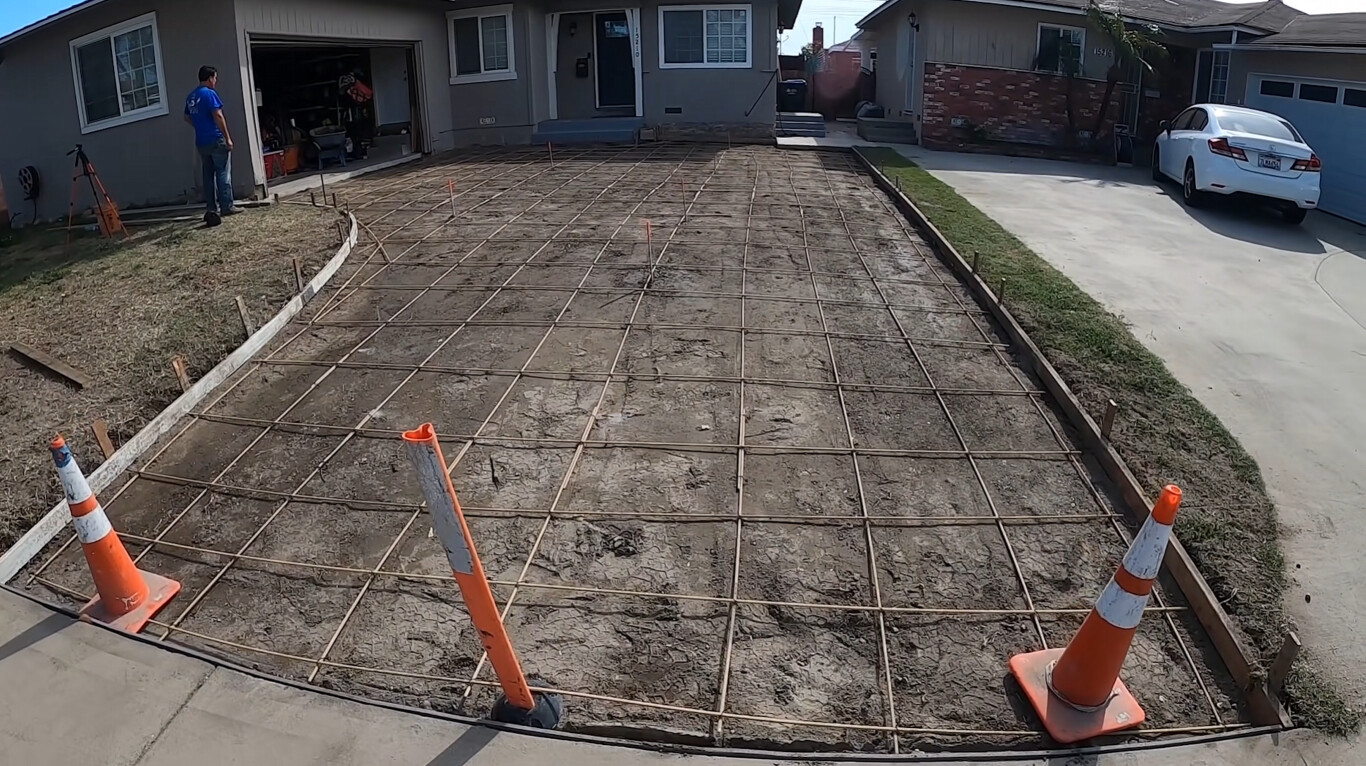
Next comes rebar installation. We tie steel reinforcement bars together in a grid pattern that provides strength in all directions. Rebar size, spacing, and placement are critical. We follow the structural plans exactly and call for inspections before proceeding to the pour.
For stem walls, we set up forms that create the walls above the footings. These forms must be perfectly level, plumb, and braced to handle the pressure of wet concrete. We install anchor bolts and holddowns that connect the framing to the foundation, ensuring the building stays attached during earthquakes.
On pour day, we bring in concrete mixed to the strength specified in the plans (typically 3,000-4,000 psi for residential foundations). We place it carefully around the rebar, vibrate it to eliminate air pockets, and finish the top surface level and smooth. After the concrete cures for several days, we strip the forms and backfill around the foundation.
If your project also needs a concrete floor slab or driveway, we coordinate everything so the work flows smoothly from one phase to the next.
Working With Engineers and Inspectors
Foundation work requires permits and inspections. We handle the permit application process and coordinate with city inspectors at each required stage. Typical inspections include footing excavation, rebar placement before the pour, and final foundation before framing starts.
We also work closely with structural engineers and geotechnical engineers. If soil reports indicate special requirements like deeper footings or soil stabilization, we implement those recommendations. An experienced concrete contractor who understands local soil conditions and code requirements is essential for foundation projects where errors are costly to correct. Our experience with local soil conditions helps projects move forward without delays or surprises.