Retaining Walls & Concrete Masonry
Strong, attractive retaining walls that control erosion and add usable space to your property.
Why You Need a Retaining Wall
If your property has slopes, uneven terrain, or erosion problems, a retaining wall might be the solution. These structures hold back soil, create level areas, prevent erosion, and add visual interest to your landscape. They can transform unusable hillside into flat space for patios, gardens, or play areas.
In Tustin, retaining walls serve both functional and aesthetic purposes. They protect homes from soil movement during heavy rains, create terraced gardens on hillside properties, define property boundaries, and add structure to flat landscapes. When built properly, a retaining wall lasts 50+ years with minimal maintenance.
Not all retaining walls need to be concrete or masonry. For walls under 3-4 feet, timber, block, or stone options work well. But for taller walls, structural walls supporting buildings, or walls that need maximum durability, poured concrete or concrete masonry is the best choice.
Types of Retaining Walls We Build
We install several types of retaining walls based on your site conditions, budget, and aesthetic preferences:
- Poured concrete walls: Monolithic concrete walls for maximum strength, ideal for tall walls or heavy loads
- Concrete masonry walls: Walls built from concrete block (CMU), often reinforced with rebar and filled cores
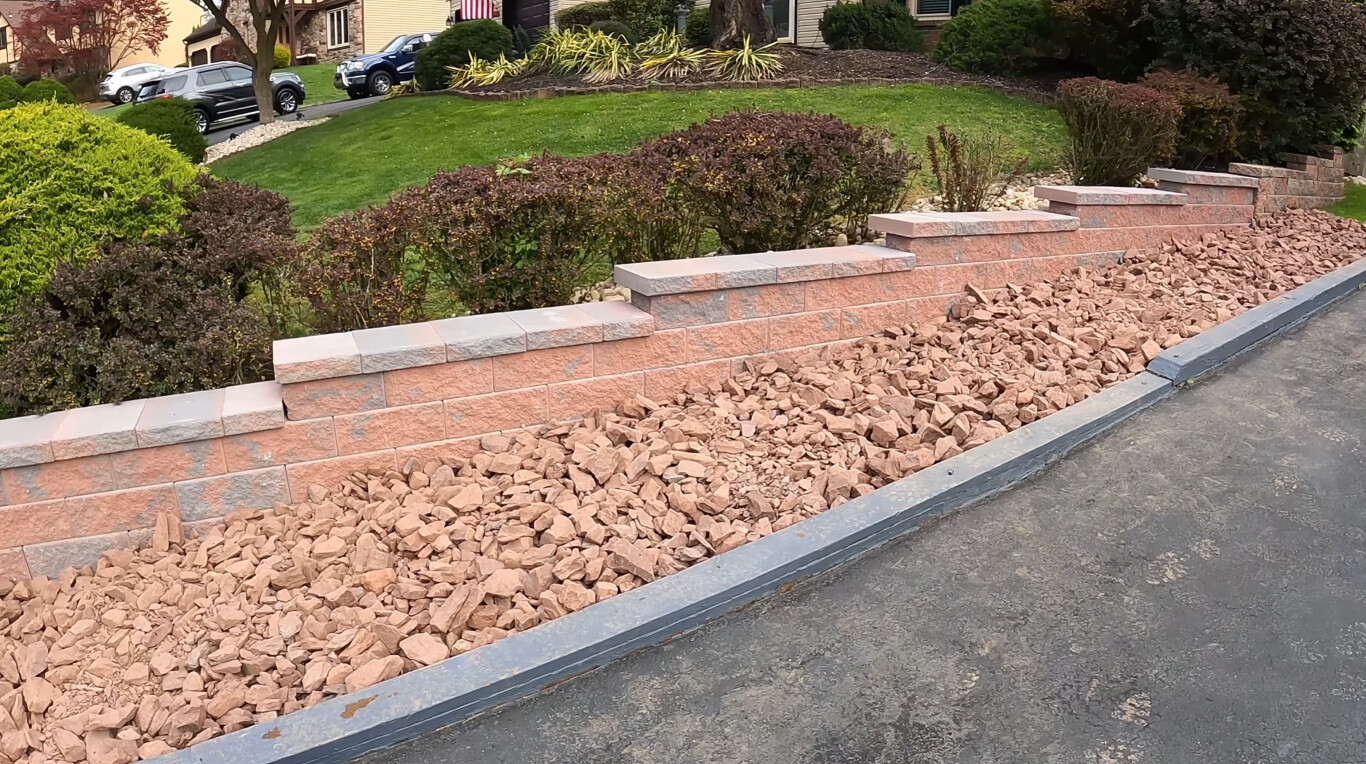
- Segmental block walls: Modular interlocking blocks that create a natural stone appearance without mortar
- Veneer walls: Structural concrete walls with decorative stone or brick facing for enhanced appearance
- Cantilever walls: Engineered walls with a footing that extends under the retained soil for stability
- Gravity walls: Thick, heavy walls that rely on mass to resist soil pressure
Wall selection depends on height, soil conditions, water table, surcharge loads (like driveways or buildings), and local code requirements. A block retaining wall is a popular choice for residential properties where both strength and appearance matter. For walls over 4 feet, we typically need engineered plans from a structural engineer.
The Construction Process
Building a retaining wall starts with proper planning and site evaluation. We assess soil type, drainage patterns, wall height, and any loads the wall must support. For walls requiring engineering, we work with structural engineers to develop plans that meet California building codes and seismic requirements.
Construction begins with excavation for the wall footing. This footing must extend below frost depth and bear on solid, undisturbed soil. We install drainage systems behind the wall including perforated pipes and gravel backfill. Proper drainage is critical because water buildup behind a retaining wall creates pressure that can cause failure.
For poured concrete walls, we set forms, install rebar reinforcement, and pour the wall in sections if needed. For block walls, we lay courses of concrete block, fill cells with concrete around vertical rebar, and cap the top with solid units or a poured cap. All work is inspected at required stages to ensure code compliance.
After the wall is built, we backfill with free-draining gravel near the wall and topsoil farther back. We compact the backfill properly to prevent settling. Many homeowners add patios, steps, or other features that integrate with the retaining wall to create complete outdoor living spaces.
Drainage and Longevity
The single most important factor in retaining wall longevity is drainage. Soil retains water like a sponge. If that water cannot drain away, it builds pressure behind the wall and eventually causes cracking, leaning, or complete failure.
We install weep holes or drainage pipes at the base of walls to release water. Behind the wall, we place a layer of gravel that channels water down to the drainage system. At the top of the wall, we grade the soil to direct surface water away rather than letting it flow down the back of the wall.
These drainage details might seem like unnecessary work, but they are what separate walls that last 50 years from walls that fail in 5. We never skip these critical steps, even if they are not visible in the finished product.